Culebra Stories
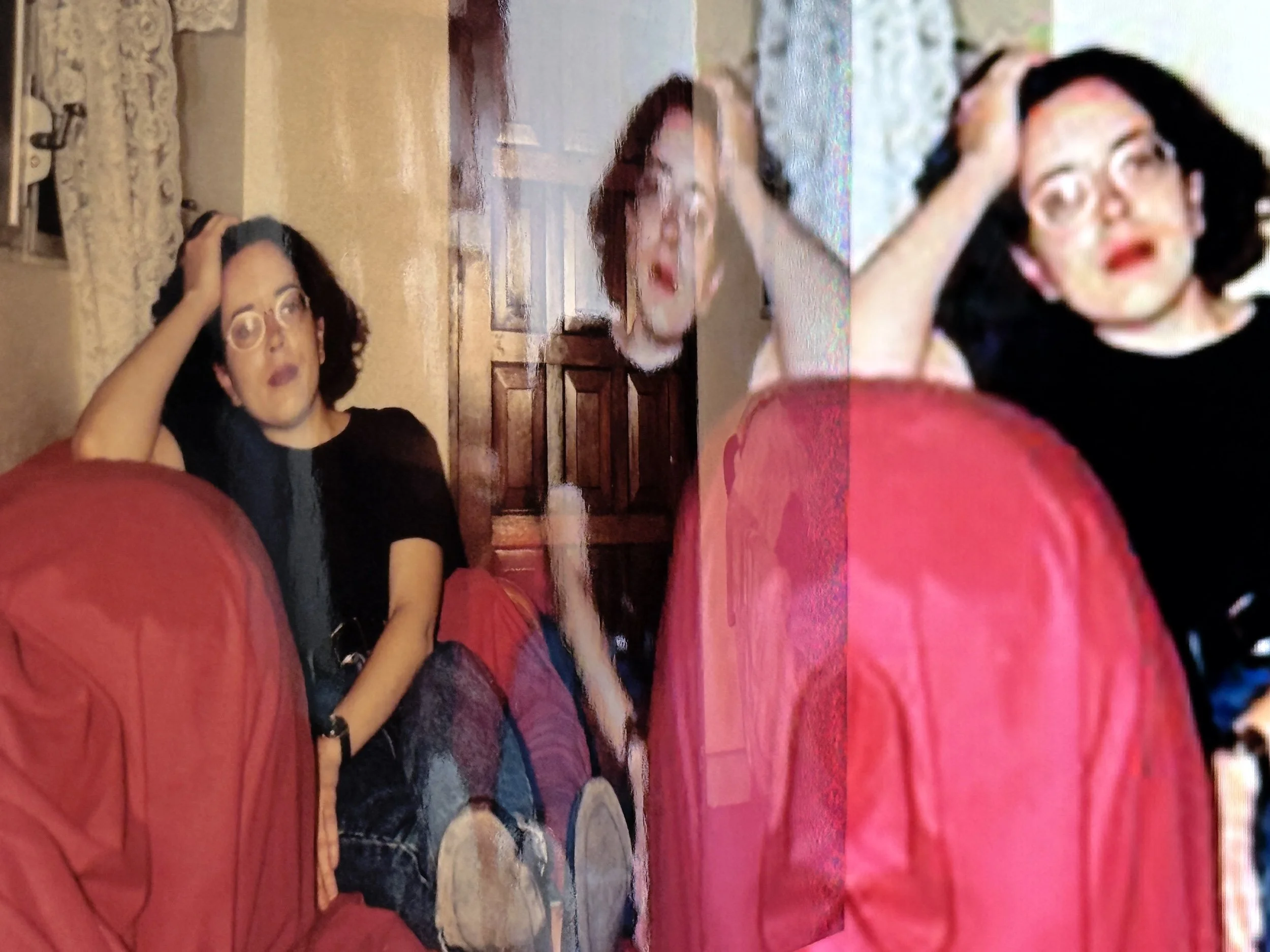
Self-portrait at Glady's’ house, Culebra, PR, late 1990s.
THE HAPPY LANDING
“If it were me, I woulda shit pickles. I woulda shit pickles.” Lisanne, never one to filter, was sitting with Gladys and Myrna and me at the Happy Landing, a tiny restaurant situated unobtrusively next to Culebra’s modest airport. Gladys owned the place, had for the last 25 years, and she had a story for practically every plate of rice and beans she’d served in her time. When family came to visit—and many did—they’d stop in to pay her a visit and would end up just like Myrna and LIsanne were right now: drinking light beer after light beer, smoking menthols, and trading memories about flights that had almost crashed, men who had overstepped their bounds with Myrna (she never hesitated to issue a correction), and an angel that once appeared in the Happy Landing as Gladys and her cook huddled in the kitchen during a terrible hurricane. I couldn’t say whether the stories were apocryphal or true to the bone. I just know they were excellent.
LUISA
Mid 50s, amber hair in tight, coarse curls, skin a dark tan, nose beakish, and a swift manner of speech, the words bent with a New York accent that hadn’t abated despite many years’ distance from the Bronx.
Luisa was telling us about the hurricane, Hugo, that had come through the island five years before. I remembered it. Hugo took down so many houses. It left people without fresh water, without electricity, without an easy means to get supplies.
And Luisa? The storm left her without her satellite dish, without her cherished rocking chair that had sat on her upstairs balcony, without her new patio furniture she’d taken such care to arrange on the deck next o the barbecue grill. Also, part of her roof was ripped out, she told us. Water leaked in and ruined the frothy pink curtains she’d ordered out of the Spiegel catalog just three weeks prior.
But Mother Nature was not going to get Luisa twice. No way. Her son Ricky, a Marine who’d flown back from his post special to help his mom and stepdad after Hugo, had rigged sturdy cables from the roof to the cement-reinforced railing along the upstairs deck. He’d brought in contractors, three separate ones, to pour a concrete foundation for the new satellite tower yet another contractor had built for the family. This new tower could be cranked down to ground level thanks to an ingenious wheel-and-chain combination installed near the antenna’s base. With his meaty military hands, Ricky, a slab-like man, had stretched a cable along the length of the 20-foot steel phallus and pulled it through a large iron eye hook planted in the cement. If the tower was going to go, so was the earth in which it had been thrust.